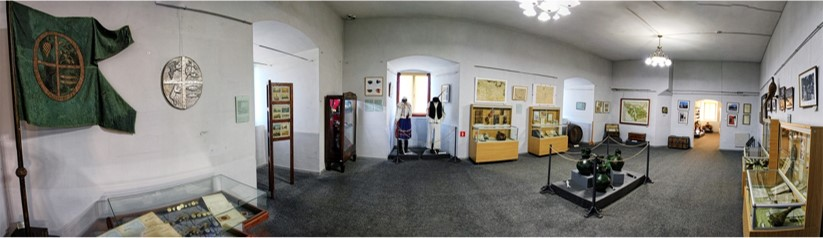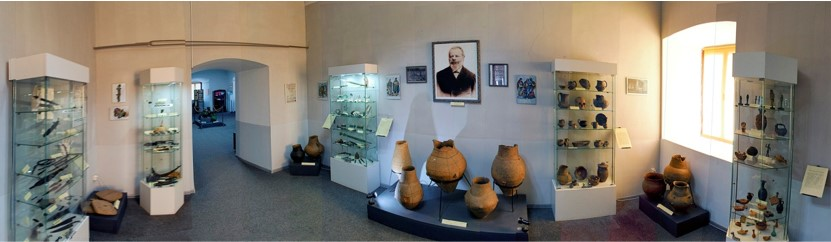
Of particular interest to visitors is the educational exhibition dedicated to one of the founders of museum work in Transcarpathia – archaeologist, historian and local historian Tyvodar Legotsky (1830-1915), whose name was given to our museum in 2015. The exhibition presents archaeological, ethnographic and historical monuments of the region collected by Legotsky. His interests included archeology, genealogy, ethnography, history, local history, linguistics, numismatics and folklore. The legacy of the amateur museum historian is not only valuable published and manuscript research, but also a large collection of antiquities, which became the basis for the creation of the Transcarpathian Museum of Local Lore in the late 1940s and early 1950s.
T. Legotsky’s archaeological collection, consisting of several thousand objects, was one of the largest at that time in Austria-Hungary.
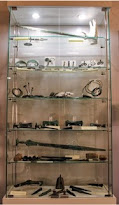
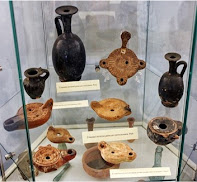
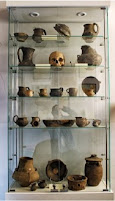
The most valuable in the collection are bronze products and Celtic antiquities found in the territory of modern Transcarpathia, Hungary, Slovakia, and Romania. The discovery of a Bronze Age treasure in the village of Klyachanovo in 1860 became the basis of the future collection. Well-preserved large clay vessels from a Bronze Age burial ground, which the scientist explored in the village of Edek in Hungary. The exhibition also includes Celtic iron products found in one of the largest craft centers in Europe of the Celtic tribes of the 3rd-early 1st centuries BC in the vicinity of Mukachevo (Gallish-Lovachka tract). Nearby are clay urns from a burial mound in the village of Kushtanowytsia, 6th century BC.